Elevate the stairs
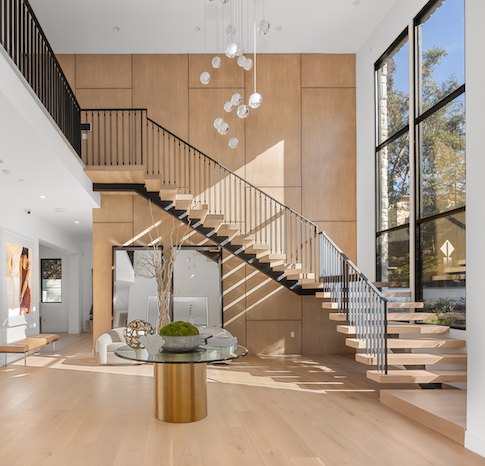
Does your home feature a staircase that you don’t love? Perhaps it is too bulky, too narrow, or just plain ugly.
A staircase both dominates and sets the tone for the space it occupies. It is the first thing anyone walking into an entrance hall or open-plan space notices, and it leaves a lasting impression. Changing the stairs, however, can seem a tall order, especially given the potential costs.
The first step towards change will be to decide what the major issues are. Is it location, its bulk, overall shape or steepness? Are the treads too narrow, or does the detailing and finish bother you?
Repositioning a staircase involves major work but can transform a home. Spiral staircases are space-saving but must be comfortable, and practical for moving furniture. Many staircases are oppressive and heavy, and can hinder the passage of light between the front and back of the house. Enclosed staircases, where artificial light is the only illumination, are serious culprits. In these cases the best approach is to discuss opening up the structure with an architect or structural engineer. Adding a skylight, open glass treads, glass or glass-and-metal balustrades are some of the many possibilities.
On a straight, narrow flight of stairs, consider altering the bottom step to create a gentle sweep. This looks more inviting. Mirroring the wall immediately opposite the staircase (floor-to-ceiling) gives an increased sense of space in a narrow hallway. Or mirror the staircase wall to create the illusion of wider stair treads.
The most difficult staircase to deal with is one with a steep rise and narrow treads. In this case, if replacing the staircase is not feasible, ensure that the stair covering is a non-slip surface. A sturdy handrail at a comfortable height will give an added sense of security and support. Place a soft surface at the foot of the stairs (even if it's just a thick rug with underlay) to cushion any falls.
Some staircases can appear uninspired, with plain, round handrails and square balusters offer little character. Replacing those with a profiled handrail and shapely spindles in a pewter-coloured metallic finish will massively improve the staircase. Or consider wrought iron, steel, or brushed steel.
Surfacing stairs with stone tiles will give instant elegance (the existing stairs must be sound and prepared with marine plywood, otherwise the tiles will crack). Wooden staircases can be stained to a more suitable colour, but remember that handrail, balusters and stairs in matching wood create a dull look. For the staircase to fade gracefully into the background, paint it to match the walls. Use floor paint and be prepared for quicker wear-and-tear.
Carpeting stairs helps with soundproofing but highlights dull balusters and handrail. Choose 100 per cent wool for its stain-resistant, hardwearing qualities. Synthetic materials will mark and feel thin. Understated stripes or a two-tone pattern can work well on stair runners; otherwise match stair carpet to the rest of the surrounding area.
Create an alternative focal point: painting the wall at the top of the stairs in a strong contrast colour will divert attention from the staircase.
If the budget precludes major works, create interest by playing with contrast: emphasize the sweep of a handrail by staining it a dark colour, but blend balusters and stairs into the wall colour, or dream up ways of highlighting the staircase's most appealing feature.