Give a frog a pond
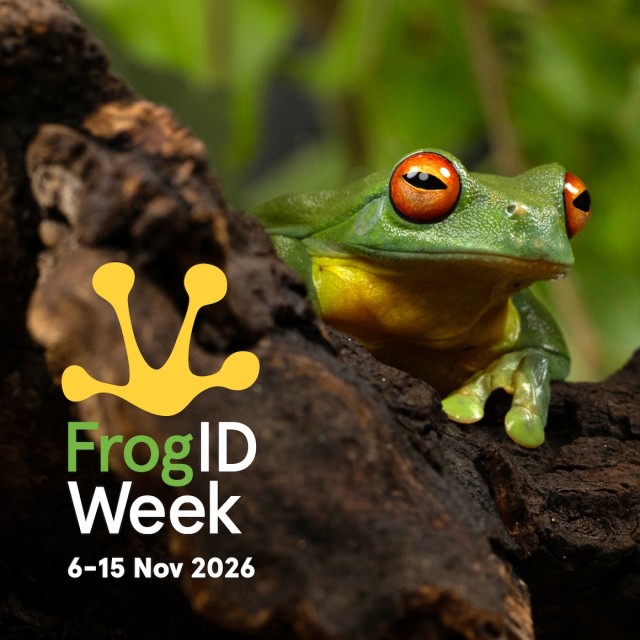
Frogs are often heard but not seen, so if you are lucky enough to have some in your neighbourhood, the Australian Museum would like to know during the ninth FrogID Week starting this Friday 6 November through to Sunday 15 November 2026.
The citizen scientist programme encourages anyone with a smartphone to record frog calls through the free FrogID app, and help scientists better understand frogs and environmental health around the country.
Whether or not you already have frogs around, let’s see what it would take to build a pond for the tiny hopping croakers in your backyard, as well as birds and beneficial insects.
Looked after properly, a pond can become home to a complex balance of plants and animals, but to stay healthy it will need the right conditions. So, the first thing to consider when choosing the site and size of your pond will be the occupants.
If you don't want the pond to support fish or plants, feel free to build it in a shady corner, but for best results for a thriving live pond, choose a place that is in the sun for some time each day, all year round.
Plants are fuelled by sunlight, and the oxygen they produce in the process stops the water turning stagnant and smelly, so they are essential to create a healthy environment for the pond's inhabitants.
Avoid placing the pond too close to shrubs or trees, as falling leaves will rot in the water and tree roots can cause leaks if they work their way through the pond liner.
Generally, if you want frogs, fish or plants to live in your pond, it should be at least 60cm deep, with a gradual slope on one side to give wildlife easy access into and out of the water. A shallow pond can be susceptible to evaporation in summer and freezing in winter. Likewise, a pond that is too small will restrict the amount of plants and fish it can support.
Once you have a location, define the perimeter of the pond with string or a layer of dry sand, then remove the turf, storing it in a separate location. If you choose to use a shelf effect, with the pond gradually getting deeper, make sure each shelf is level while removing the earth.
Measure the length, width and maximum depth of your pond - twice depth plus width and twice depth plus length will be the minimum size of pond liner to buy. You might end up with extra off-cuts, but make sure you hold onto any off-cuts which can be used later to make a waterfall or additional smaller pond.
Remove any lumps or sharp stones from the hole, then line the ground with old carpet or soft builders' sand - both will help protect the pond liner from being punctured. Spread the liner over the hole taking care not to drag it across the ground damaging it, and secure the sides with bricks.
Fill the hole with water until the pond is full, and then trim the sides of the liner leaving at least a 30cm overlap around the sides of the pond. Cover the overlap with paving slabs or turf up to the water's edge, making sure the liner is protected from the sun, and position plants and oxygenators if you should so wish.
It is best to wait around six weeks until the eco-system is established before adding fish. Your local pet store will be able to tell you the best type of fish to keep in a pond in your area, as well as advising on and supplying suitable plants.
A pond can pose a danger to small children so make sure your backyard is enclosed, neighbourhood kids don't have access and that all visiting children are constantly supervised, just as you would with a backyard pool.
If your garden pond is exposed to the neighbourhood it can be a good idea to look at rigid steel mesh frames that can be positioned securely over the pond, which should be positioned above the water level and able to support the weight of a young child.