We just need more homes
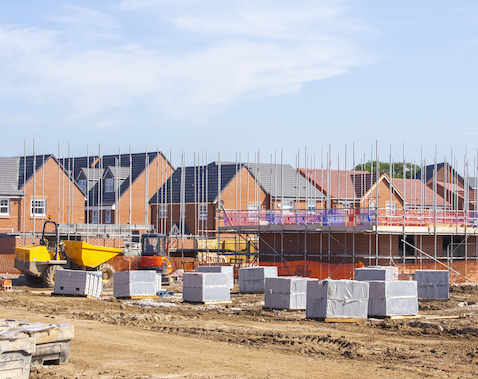
Higher prices and a shortage of rental accommodation are symptoms of a shortage of housing stock, not the cause, peak housing body HIA said this week.
According to HIA Chief Economist Tim Reardon, Australia needed to build more than 250,000 homes last year just to keep pace with demand growth and begin reducing the housing shortage.
“And yet we commenced less than 200,000 homes. This is why home prices and rents are rising”, he added.
Reardon was responding to the latest ABS release of its national, state and territory population data for the 2025 calendar year, covering births, deaths and migration. The new figures show that population grew by 412,500 and Net Overseas Migration (NOM) by 301,000 in the calendar year.
"Australia's housing shortage should be viewed as trying to squeeze 11 million households into 10 million homes”, he suggested.
“Rising home prices, rising rents, elevated investor activity and a shortage of rental accommodation are all symptoms of a shortage of housing stock, not the cause of the shortage.
"On top of that existing shortage, additional demand for homes continues to exceed”, he said, adding that the National Housing Supply and Affordability Council (NHSFC) forecasts Australia will continue to under-supply housing each year through to at least 2030.
“HIA's modelling indicates that Australia's housing shortage is likely to worsen more rapidly than NHSAC forecasts as population growth is likely to remain elevated, occupancy rates are likely to continue declining over time and unemployment is expected to remain low.
“For those attempting to forecast housing demand based on the population growth in 2025, a common mistake that is made is as simple as dividing the population growth by 2.5 to calculate the demand for housing. This is wrong and dangerous and is part of the reason states and local councils have undersupplied housing for decades.”
HIA has released a report, ‘Beyond Population ÷ 2.5: Understanding Housing Demand in Australia’ explaining that there aren’t 1 million vacant homes in Australia and why housing demand is not simply derived from migration.
“Migration contributes to housing demand directly through population growth and indirectly through stronger economic growth” Reardon said. “This means the relationship between migration and housing demand is not linear.
“The Australian government is responsible for setting the rate of migration, the states responsible for building infrastructure and local councils responsible for building homes. The Parkinson Review highlighted the need for these three tiers of government to coordinate their priorities to address the shortage of dwelling stock”, Reardon said, adding that the ‘consequence of failure is predictable: rents rise, prices rise and affordability deteriorates’.
“The $2 billion in investment in housing infrastructure announced in the Budget is a significant step in the right direction to lowering the cost of new housing supply. To make homes more affordable, governments need to lower the cost of delivering new homes to market.
"Australia did not build enough homes to meet last year’s demand growth, let alone reduce the housing shortage that already exists.
"Achieving the Housing Accord target of 1.2 million homes is therefore not optional. It is essential if Australia is to restore affordability and give more Australians access to secure housing.
“If we want investors to leave the housing market, the solution is to increase the supply of homes, relative to demand growth, and ensure prices stop rising, rents remain stable and to allow renters to regain some market power over landlords.
“Then, with time, investors will leave the housing market for other industry sectors that provide better returns. Attempts to regulate or tax investors out of the housing market have failed in the past and lead to higher home price growth, as demonstrated in this year’s Budget papers.”
Several states and territories are now above their pre-pandemic decade population trajectories, led by Western Australia (+166,000) and Queensland (+143,200), which is impressive for Western Australia given it has half the total population of Queensland.
This is followed by South Australia (+45,100), Tasmania (+11,500), the Northern Territory (+6,400) and the Australian Capital Territory (+800). New South Wales (-86,700) and Victoria (-228,900) are still below their pre-pandemic decade population trajectories.
A copy of the report is available from the HIA website.